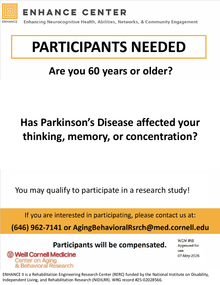

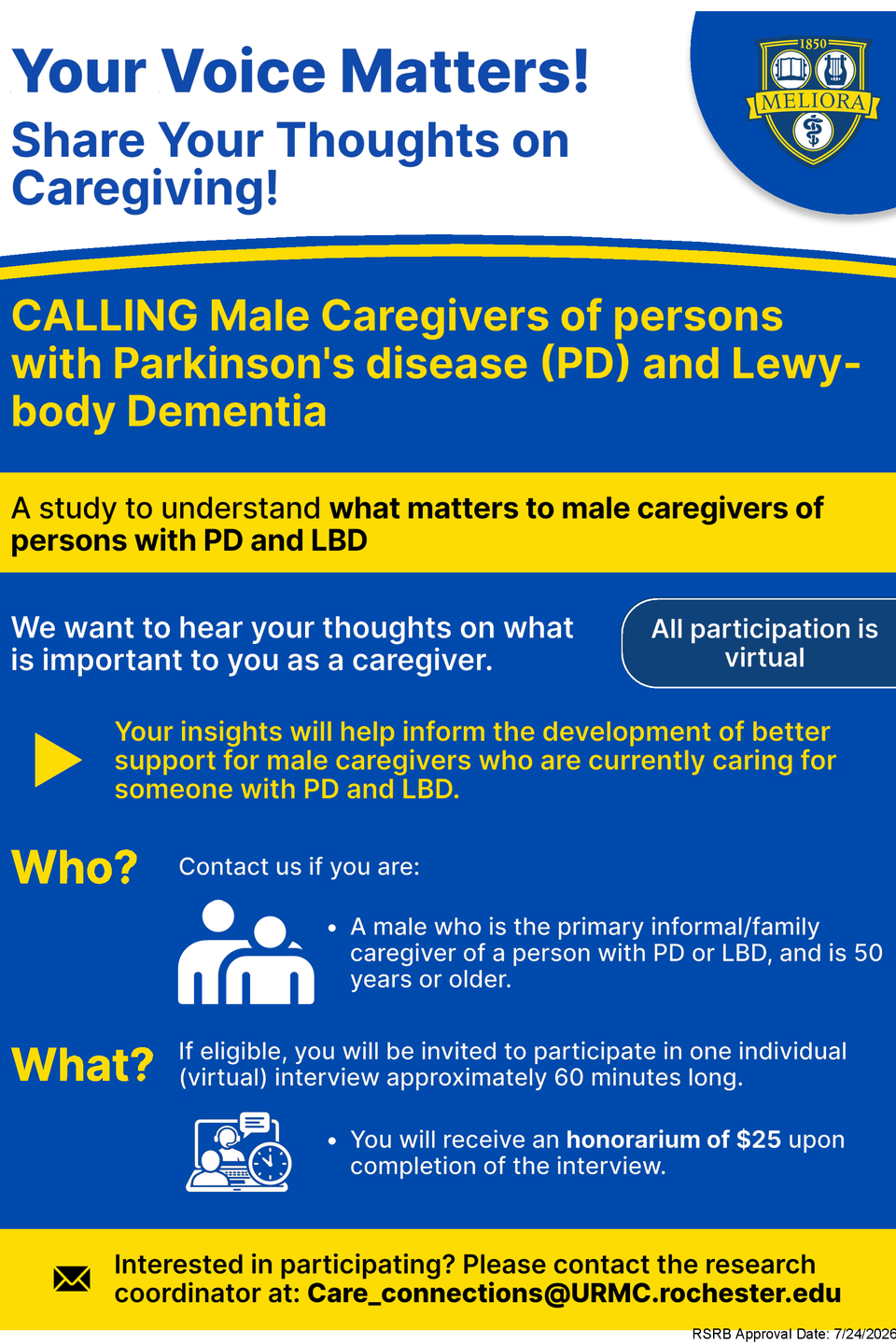
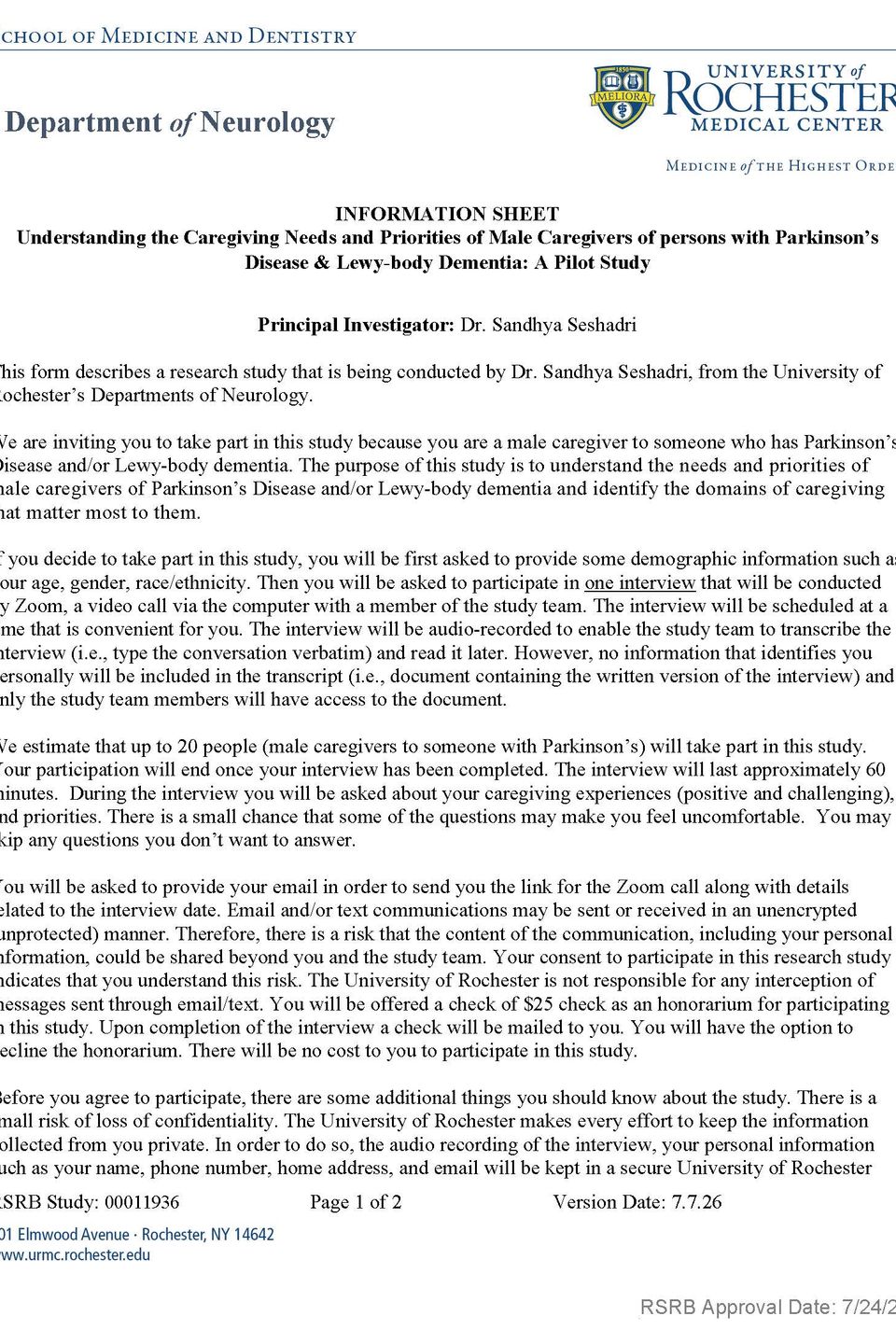
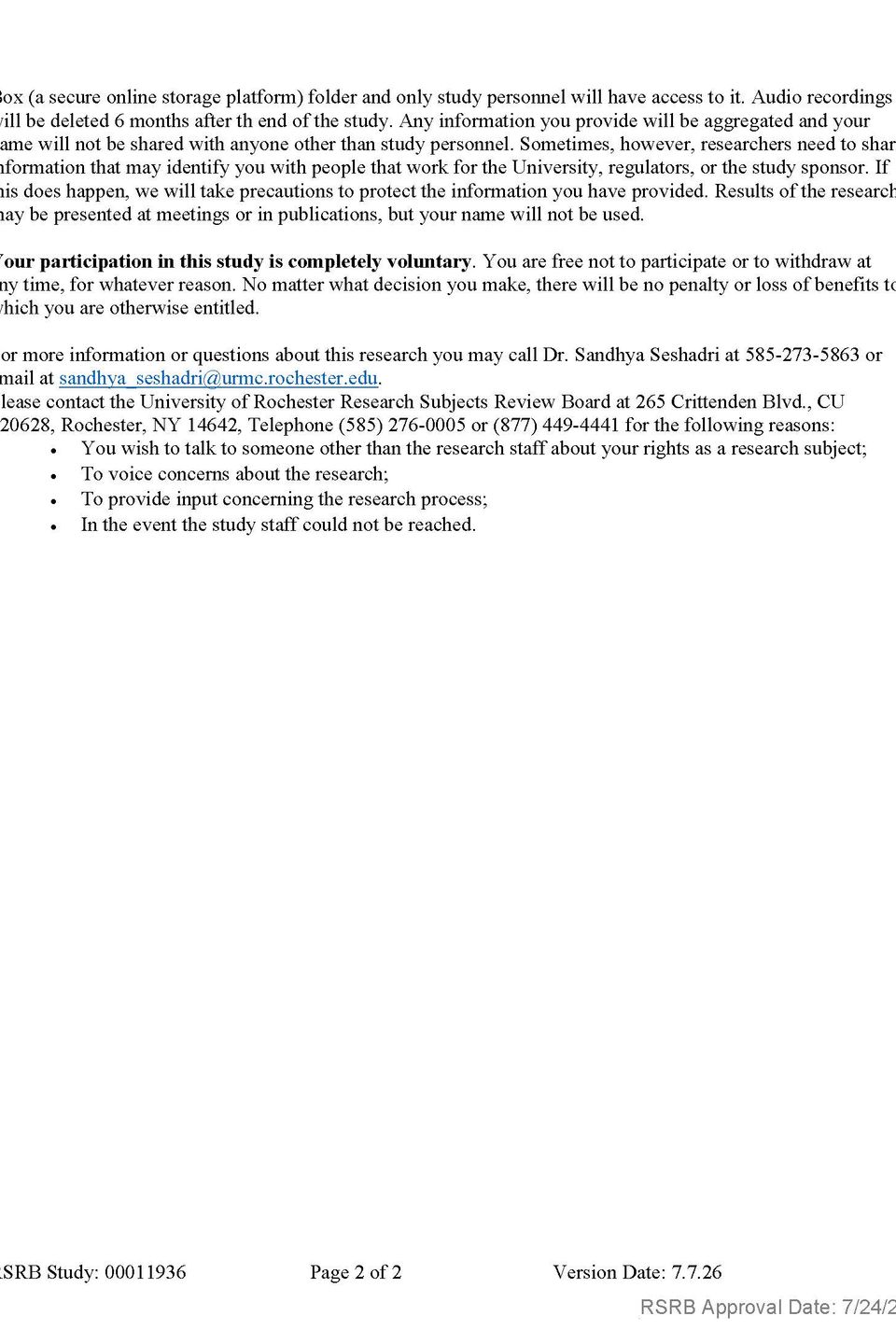

Nazareth University wants to hear from YOU!
Nazareth University students are conducting a survey to better understand the perceived benefits and barriers of group exercise and support groups for individuals with Parkinson’s disease.
The survey is brief, confidential, and designed to take 15 minutes or less to complete.
Click the following link to begin the survey or read on and click the button below::
https://naz.qualtrics.com/jfe/form/SV_0eTUGhp3ZMJQMZw
Patient feedback will play a critical role in guiding future improvements that benefit both the Parkinson’s community and our support services.
If you have any questions or need additional information, please don’t hesitate to reach out to Amelia Haight, ahaight0@mail.naz.edu.
The survey is brief, confidential, and designed to take 15 minutes or less to complete.
Click the following link to begin the survey or read on and click the button below::
https://naz.qualtrics.com/jfe/form/SV_0eTUGhp3ZMJQMZw
Patient feedback will play a critical role in guiding future improvements that benefit both the Parkinson’s community and our support services.
If you have any questions or need additional information, please don’t hesitate to reach out to Amelia Haight, ahaight0@mail.naz.edu.